25 October 2020

A Birth Story in Five Acts

My first child was born January 2018. It took me almost a year to tell that birth story in a public sphere.

It's a big story.

It’s so big that I knew I would go through another round of processing before Baby #2 arrived (guess date: October 31). So big that I put off looking at my colleague’s edits and comments on a rough draft for nearly a year. So big that these almost three thousand words still aren’t enough to capture the full dramatic structure.

Well, enough preamble. Onto pre-labor.

23 January 2020

Collect for those struggling with their gender

 This collect is intended for people struggling with their biological sex in some way: gender confusion, gender dysphoria, or just not feeling comfortable with their identify as male or female. 

20 January 2020

Where to Go for Coffee or Beer with a Toddler in the Twin Cities

Want to meet up with a friend for coffee or a beer, but don't want your squirrely toddler finding "bonus toys" at the cafe or brewery? Check out the businesses on these Google Maps lists!

toddler playing in play area
The play area in Milkweed on Lake Street
kept this toddler busy for nearly two hours.

10 October 2019

Double Green Casserole

Green tomatoes—just what do you do with them?

I embrace that question every fall. This year, rather than matching flavors, I matched colors and added green tomatoes to a green bean casserole. At least one non-family member professed to like it, and seeing as she asked for the recipe, I believe her.

22 August 2019

Eating Disorders and Trauma: A Match Made on the Track (and Field)

This post was written by Elizabeth Briasco, a dietitian with a Master of Science degree in Sport and Exercise Nutrition. 

The fire that you tried to burn me with, it made me who I am
All the things you said I couldn’t do
Guess what, yes I can
‘Cause I’m not weak, I’m not broken, I am bold
And the fire you put me through turned me into gold
I’m not done, I’m no loser
Watch me take on my bright future
Tonight I’m no bronze, I’m no silver
You’ll be thinking damn I knew her
But you didn’t
"Golden," Ruth B


I would first like to give a shout-out to everyone trying to heal from trauma they do not discuss, especially those who feel that their trauma is not valid.

If this is you, please know:

Your experiences are valid.

The behaviors you developed so that you could survive are valid.

You are valid, you are seen, and you are not alone.

~~~

We know that the development of eating disorders (EDs) is multifactorial. I love that the harms of dieting, toxic sociocultural values, and unrealistic body standards are being thrust into the spotlight but I can’t help but feel that a crucial, albeit uncomfortable, contributor to this mental illness is being left out of the conversation: trauma.

09 March 2019

When should I worry about my weight?

Usually on this blog, I answer my own questions. But when an old friend tells me that my answer to his question was helpful to him and could be to others too, well, I’ll break format for that.

How do I know I’m healthy?


The question:
So when it comes to being fat/body positive, I've been pretty successful in applying that to other people, but I'm not sure how/whether to use my own weight fluctuations to assess my own health. How do I assess my diet/exercise level? Should I evaluate weight gain/loss? Are there measurable signs that my diet and exercise routine are working for me? At what point (if ever) does weight gain/loss become a concern?
There are at least two ways to understand your weight changes and health status: with your head and with your heart. We’ll explore both. Before we do, though, let’s assume that you are a disease-free, able-bodied person who eats a reasonable diet, i.e. you’re not getting 40% of you calories from, say, alcohol or donuts.

22 February 2019

Lucky Lentil Soup

These days, when people ask me what's new, I talk about two things:
  1. Bullet journaling.
  2. Buying grains and legumes in bulk.
And when I say bulk, I mean BULK. Forget a pound or two of beans in a Ziploc bag from the co-op. I'm talking 25 pounds of green lentils in a brown paper sack from Azure Standard.

With all those lentils in the basement and all that snow outdoors, of course lentil soup is on the menu. And throw in the black-eyed peas leftover from another recipe, why not.

Black-Eyed Peas

15 May 2018

Birth and Burning Man

BM Baby by Marco Sanchez.


In 2016, I attended Burning Man, the indescribable annual festival in the Nevada desert. A year and some change later, I birthed a baby. Sitting soft and damp on a couch with a nursling, texting with a burner friend, I realized the two experiences had more in common than I ever would’ve guessed.

29 December 2017

Earnin' Cred and Makin’ Bread: Dietitians Riding the Career #strugglebus

This post was written by Elizabeth Briasco, whom I precepted fall 2015. She is now a dietitian pursuing a Master of Science degree in Sport and Exercise Nutrition in the United Kingdom.

Several words typically come to mind when we hear the word "intern": naive, coffee, and free labor might be some of them. Most internships pay nothing or, at the very most, minimum wage.

However, there are actually internships out there with a less than 50 percent acceptance rate that require interns to pay thousands of dollars just to participate. No stipend is offered for housing, food, materials, transportation, or any other miscellaneous internship costs. The internship consists of at least 1200 hours of practical experience across three to ten different sites and can last anywhere between eight months and two years. Hours range from forty to fifty hours a week, giving interns very little leeway for a part-time job, assuming their internship director even allows them to get one.

Welcome to the confusing, costly, and demanding world of dietetics.

30 May 2017

Pledges and the Playa

What you sign up for is not what you get from Burning Man.
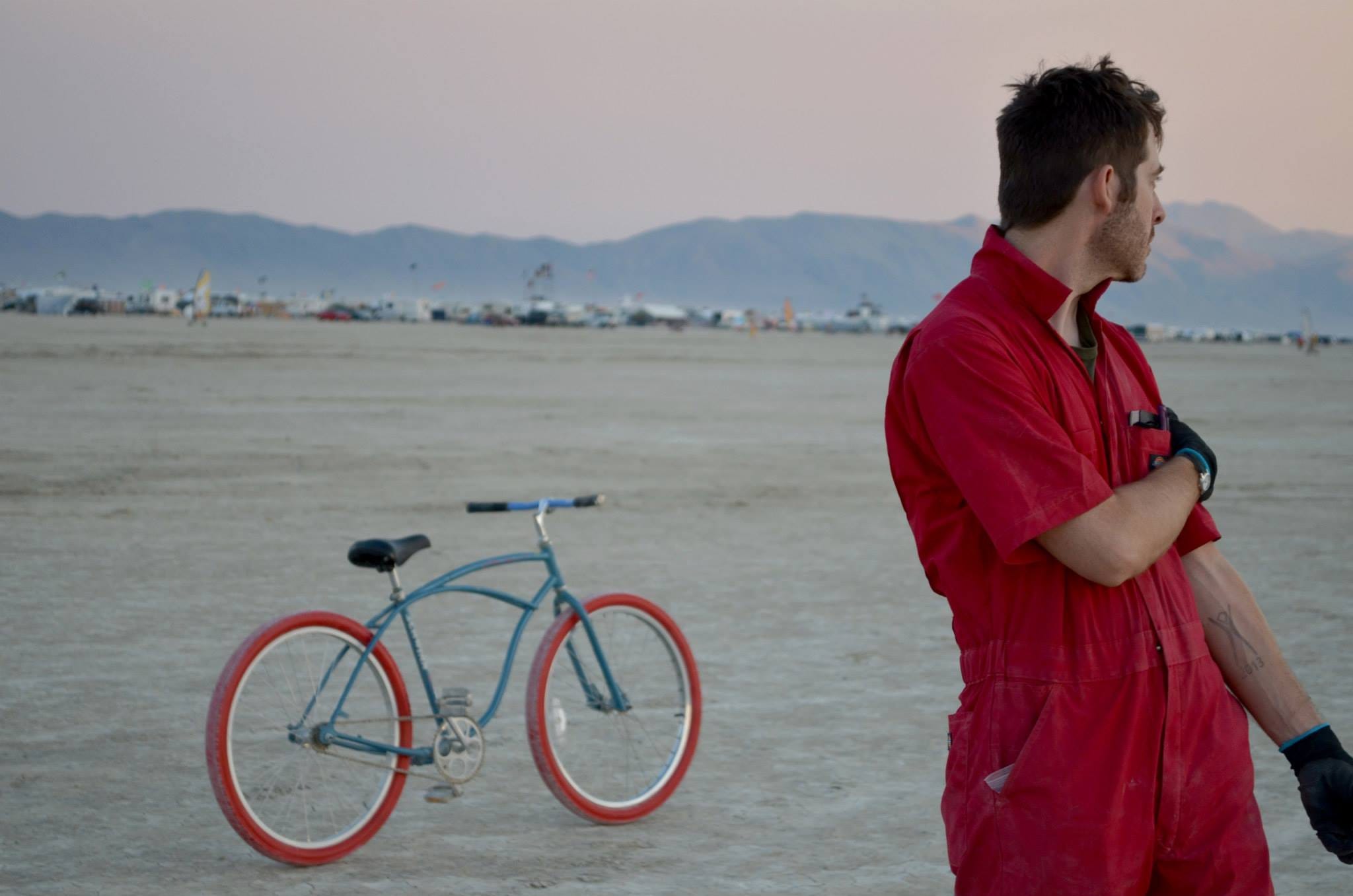
The man with the plan, Seth Statmiller, on the playa with his vehicle of choice in 2013. Photo credit: Elizabeth Richardson.


I returned a red jumpsuit yesterday.

It was too big, too coarse, too heavy with pledges I know I won’t fulfill.

A panel of my peers drew me to the jumpsuit. Every August, two established friends trek to Nevada’s Black Rock Desert to gift wheeled mobility to the bikers of Burning Man. Every year, they assemble a crew of employees, comrades, and recommended comrades to pedal the machinery of Hammer and Cyclery.


Hammer and Cyclery camp, 2013. Photo credit: Travus Cartwright.

And every September, they return to the Default World with dust in the creases of their jumpsuits and stars in their eyes and incomprehensible tales in their mouths.

For, unfortunately, no one can be told what Burning Man is. You have to see it for yourself.

Cajoling and curiosity got the upper hand one September. I pledged to don the red jumpsuit the following August, to see how deep the Playa goes.

I fulfill my pledges.

I attended orientation and received my jumpsuit. I bought tickets for entrance, for airfare, for the Burner Express Bus. I took off. I landed. I got on the bus, I got off the bus.

I fell flat on my face.

No, really — the rituals for first time Burners call for immediate facedowntime with the dried out lake bed, the playa, the playground. You won’t escape that salty-slick dust for the next eight days. Get acquainted.

Get acquainted — with the dust, the camp, the comrades, the old friends showing new facets, the rhythm of sunned days and lit nights.

Just another light show in 2016. Photo credit: Alex Düsterfeld.

I was pledged revelry, revelation, reframes, and Burning Man fulfilled these pledges; of course, not as I willed it but as the playa provided.

Take the reiki session for which I waited two hours, before which I traded heartbeats with unmet friends, and after which I could barely pronounce my name.

Take the trip down memory lane, squeezed between a live performance of a nine-piece band and a midnight Skrillex set, lead by a guardian disguised as a established acquaintance.

Take the shoulder-squeezing climb up ladders bound together by wishful welding and good faith; at the top I faceplanted into the figurative and literal open arms of a comrade acquired in a heartbeat; looking for that one last nail to pound into that second freshest coffin.

The Temple, 2016. Photo credit: Mark Kasiewicz.

This wasn’t what had beckoned me. I’d counted on familiar time with established friends, not snatched time with acquired comrades. I thought I’d grow new powers, not accept existing ones. I was promised new brain space, with which I would look forward, not back.
You get what you get and you don’t pitch a fit.

No, I got what the playa had for me. Dusty revelry. Tear-soaked revelation. Prismatic reframes.

Photo credit: Alex Düsterfeld. Sunglasses credit: Camp Gravity. Clown nose credit: Some dude.

I got on the bus, got off the bus. I took off. I landed.

I had stars in my eyes.

I pored over my experience and others’, no longer incomprehensible, now tantalizingly explainable. But the experience jostles and rubs, flashes and glares, rings and sighs. Months of memories unsettled, like a snow globe shaken and flash-frozen.

So I rubbed my head, sighed, picked up the red jumpsuit. “You’re going home again,” I told it. “Have a good burn.”

10 May 2017

Hei-Do Tofu

When I was a child, my mom used to make a delightful stir-fry called Ma-Po Tofu. It was an especial treat because it had pork. My mom cooked mostly vegetarian throughout my childhood, so this was a notable departure from the norm (stir-fry with tofu was well within the norm).

Last month, I had a hankering for that same Sichuan dish, so I clicked through the first search result Google gave me: Ma-Po Tofu recipe from Epicurious. The result was satisfyingly similar to my memories, so I filed it away for a repeat.

And that repeat came last night. I contemplated the black beans thawing in the fridge and thought, "I can pretend that's pork." And thus Hei (black) - Do (bean) Tofu was born.

Hei-Do Tofu with a side of bok choy.

16 April 2017

Chickpea-Quinoa Pilaf-Salad

This year for Easter, I offloaded my typical bread baking duties to my kitchen scientist husband and concentrated on a toothsome salad. I riffed on a pilaf recipe I'd made a couple times recently, because, you know, never try something new when you're cooking for 22 adults and assorted tots.

This recipe is adapted from Veganomicon, the only cookbook I cook out of consistently (even though I'm not vegan.) It's saucy and spicy. Buy it, I dare you. 

Chickpea-Quinoa Pilaf-Salad

Ingredients.

  • 2 tbsp olive oil
  • 1 small yellow onion, chopped fine
  • 2 tsp garlic and ginger, minced (2 cloves of garlic works, too)
  • 1/2 tsp cumin, ground (if you are feeling ambitious, toast the whole seeds first and grind them yourself)
  • 1 tbsp coriander seeds, crushed (not ground, let's keep some texture folks - remember, this is a toothsome salad)
  • Freshly ground black pepper, some to lots
  • 1/2 tsp salt
  • 1 tbsp tomato paste
  • 1 cup quinoa, rinsed (and maybe even soaked, why not)
  • 2 cups cooked chickpeas (or 1 15-oz can of the same, drained and rinsed)
  • 2 cups vegetable broth
  • 1 carrot, shredded
  • Fresh cilantro, some to lots, chopped (stems too!)
  • 1 tbsp apple cider vinegar

Directions.

  1. In a small pot over medium heat, saute the onions in olive oil for about 7 minutes. Add the garlic and ginger, and saute for 2 more minutes.
  2. Add the cumin, coriander, pepper, salt, and tomato paste. Saute for another minute.
  3. Add the quinoa and saute for 2 minutes.
  4. Add the chickpeas and broth. Cover and bring to a boil. Lower the heat until the mixture is simmering, and cook for 20 to 30 minutes, or until the quinoa has absorbed all the broth. Stir whenever you are feeling impatient and want to check on the absorption progress.
  5. Remove from heat and cool, perhaps overnight. Before serving (whenever it's convenient, really), stir in the carrot and cilantro. Sprinkle the vinegar and stir again. Taste and adjust the seasonings.

12 June 2016

Hannah's MSP Top Three

My fashionable friend +Jessica M. Tomaselli moved back to the Twin Cities recently and we met at GYST Fermentation Bar to catch up because we are hipsters. And because I like to be helpful, I named a dozen places to eat and drink well. And then typed up a Google Doc with even more suggestions because duh. 

Here they are!

22 April 2016

Nitrogen Song

As nature shakes winter's sharp sting,
this protean poem unfurls into broad notes of spring.

~~~~~~~~~~~~~~~~~~~~~~~
One thing broke me;
         two built me back.

Fall in FScN 4612, Human Nutrition,
each lecture softening the edges of my circumscribed truth.
Studies strive for stolid statements,
         but humans refuse to cooperate.
We fictionalize what we ate yesterday,
we guess at how often we eat fish,
we tick the same box for grass-fed beef,
         for venison,
         for McDonald’s Hamburgers.

I crumbled under the weight of peer-reviewed articles,
at odds with each other,
squinting their way to the truth.
~~~~~~~~~~~~~~~~~~~~~~~

What is protein?

Amino acids line up according to ancient instructions,
attract and repel each other,
furl into microscopic protein machines,
group and grow to make
this protein machine,
complex
and
communal.

02 February 2016

Slow-Cooker Lentil Lasagna

At the beginning of January, I heard about slow-cooker lasagna twice in the same week. Baader-Meinhoff phenomenon, a sign of the season, ooooooor do I just spend too much time on social media platforms?
The idea simmered in my mind as I worked my way through two pans of disappointingly dry experimental manicotti, and came to a full boil this disruptively snowy day in February.


I found a recipe on Real Simple, and then modified it to include more veggies and one of my favorite legumes. "It's edible," my dad said, his standard line for any dish containing beans. Tastes better than my li'l Samsung camera phone makes it look. And is not at all dry.


A photo posted by Hannah J (@jastrd) on

Slow-Cooker Lentil Lasagna

Ingredients. 

  •  2 28-oz cans diced tomatoes, drained 
  • 6 cloves garlic, finely chopped 
  • 1 tsp dry oregano and 1 tbsp dry basil, or whatever combo strikes your fancy
  • salt and pepper 
  • 1 15-oz container ricotta 
  • 1 tbsp parsley
  • 1/2 cup grated Parmesan or Romano cheese
  • 8 oz standard lasagna noodles (not no-boil) 
  • 1 1/2 cups frozen spinach
  • 4 small carrots, grated 
  • some amount of cooked brown lentils*
  • 8 ounces mozzarella, grated
* I cooked a pound, dolloped away, and froze the rest. You could also use red lentils.

Directions.

  1. In a medium bowl, combine the tomatoes, garlic, oregano, basil, 1/2 teaspoon salt, and 1/2 teaspoon pepper. In another medium bowl, combine the ricotta, parsley, Parmesan or Romano, and 1/4 teaspoon pepper. In yet another medium bowl (sorry!), combine the spinach and carrots.
  2. Spoon 1/3 cup of the tomato mixture into the bowl of a 4- to 6-quart slow cooker. Top with a single layer of noodles, breaking them to fit as necessary. 
  3. Add half the spinach/carrot mixture. Dollop with a third of the ricotta mixture, a third of the remaining tomato mixture, and some amount of lentils. Sprinkle with a third of the mozzarella. 
  4. Add another layer of noodles and the other half of the spinach/carrot mixture. Repeat the dolloping procedure with the other ingredients. 
  5. Finish with a layer of noodles and the remaining ricotta mixture, tomato mixture, and mozzarella. Set the slow cooker to low and cook, covered, until the noodles are tender, about three hours. Let rest 10 minutes before serving to your parents and housemate.
Have you made slow-cooker lasagna? 

21 December 2015

Always Look on the Bright Side of Life

Land, food, and life — it's a broad theme. "It has to be," I wrote six years ago.

I usually write about how the land produces food, how the food we choose affects our lives as individuals and as fellow biospherians, or how excited I am about nerdy food system things.

This week, the connections between land, food, and life take a new configuration: I recently backpacked across a section of land by the North Shore of Minnesota with what I thought was adequate food and supplies to sustain life for a weekend. At the trail head, I was bright-eyed and bushy-tailed.

Much akimbo very backpack wow
Photo credit: Arthur Aaberg
"Adequate food." "Sustain life." "Always look on the right side of life." Sounds so simple. And of course it never is.

Three-quarters through a supper of seriously salty vegetarian chili reconstituted with melted snow (fingertips shoved under the bowl to capture fleeing warmth), I asked my trail buddy how he would feel if we cut the trip short.Visions of pancake breakfasts and mini sardine pizzas had darkened and slipped away as quickly as the southern sun below the piney horizon and the circulation from my becottoned fingers.

A photo posted by Hannah J (@jastrd) on
I knew I needed to avoid cotton, but didn't actually do it. Never again.

Even in the dark, I looked on the light side of winter camping (aka upsides).

Upside: No bug bites.
Downside: Frostbite.

Upside: Your food won't spoil.
Downside: Your food will freeze.

Upside: Snow-covered paths are easier on your feet.
Downside: You don't know what that snow is covering.

Upside: No other people around to distract you from the wilderness.
Downside: No other people around to extract you from the wilderness.

Did I miss an upside? A downside? Let me know.

31 October 2015

Green Stuff

A jar of my favorite condiment is on the table. "What's that green stuff?" someone asks.

A photo posted by @jastrd on

"What, this? I ask. "Oh, it's green stuff."

Someone rolls their eyes. Someone else asks, "What's in it?"

I stare off into the distance, trying to remember what I pulled out of the garden, fridge, pantry, and spice drawer this time. I start a list: "Parsley, white pepper, rice wine vinegar..."

23 April 2015

Renewal. Retool. Remake.

This lyric essay is an adaptation of the piece I performed at April's MNFYP event, part of the storytelling series. The topic: renewal.

I read a poem last November, when the world was wrapped in mono gray. It was the climax of MyTake: A Story to Nurture in Five Food Groups.

As nature squeaks into color, life, and growth, this protean poem unfurls tightly packed stanzas into the broad notes of spring.

~~~~~~~~~~~~~~~~~~~~~~~
One thing broke me;
         two built me back.

Fall in FScN 4612, Human Nutrition,
each lecture softening the edges of my circumscribed truth.
Studies strive for stolid statements,
         but humans refuse to cooperate.
We fictionalize what we ate yesterday,
we guess at how often we eat fish,
we tick the same box for grass-fed beef,
         for venison,
         for McDonald’s Hamburgers.

I crumbled under the weight of peer-reviewed articles,
at odds with each other,
squinting their way to the truth.

Winter, and I watched a dietitian speak with precise passion
         of an ecological approach to food and health,
         of environmental health and natural resources,
         of starting with oneself.

Essential building blocks condensed
         into a strand stretching
         from a protein machine, bending and twisting
         into a tertiary structure,
The Food System.

Summer, and I was swept along on a sustainability safari:
landing in locations
         from labels off co-op shelves,
scuffling with scripts
         from scholars and scientists,
facing furrowed facts
         from farmers and foragers.

I transcribed novelty into neurons,
I put my hands into the blackness and pulled.
~~~~~~~~~~~~~~~~~~~~~~~

What is protein?

Amino acids line up according to ancient instructions, attract and repel each other, furl into microscopic protein machines, group and grow to make this protein machine, complex and communal.

07 April 2015

Where you buy your food in Uganda

High school classmate Sadie Struss traveled to Uganda one day to visit a friend and help facilitate training sessions for Special Education. Before the trip, I asked Sadie if she would blog about it, and she made it her mission to record everything about food that she could.

In Uganda most families have personal gardens, but they also go to a market to buy food that they don’t grow themselves. Supermarkets are just starting to arrive. Here are some pictures from a variety of markets.
As you enter the market, you see lots of goods for sale. Clothes, shoes, books, tubs. etc.

This market in Entebbe had a covered area where the food was kept.


One thing you can buy in the market is dried silver fish. These fish are used in a soup and other dishes. I ate some later in the week so you will see pictures of them prepared.

That's silver fish in the blue bag.

You can also see the other foods that are available. Mangos for example were 1,000 shillings or about 30 cents. Next to the bag of fish are oranges. Oranges are not orange in Uganda so they think the name is very funny.

Meat is also available in the market. If you bought something like chicken, you would be buying a live chicken to take home and kill and clean. I did not eat meat while traveling.

Beans are a major part of the Ugandan diet, as well as dried green peas.

Next up: Street foods in Uganda.